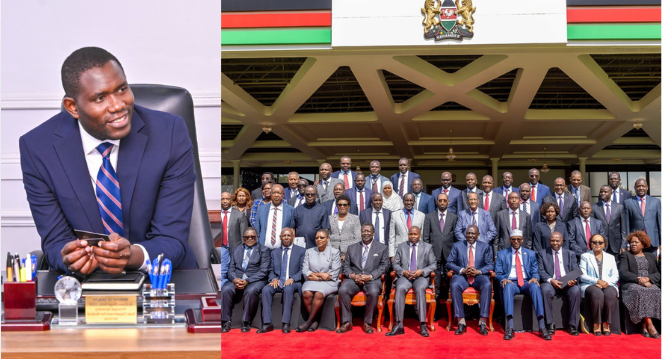
A dispute continues to unfold over public hospital payments after Medical Services Principal Secretary Dr Ouma Oluga ordered the removal of mobile money Paybill numbers from public health facilities.
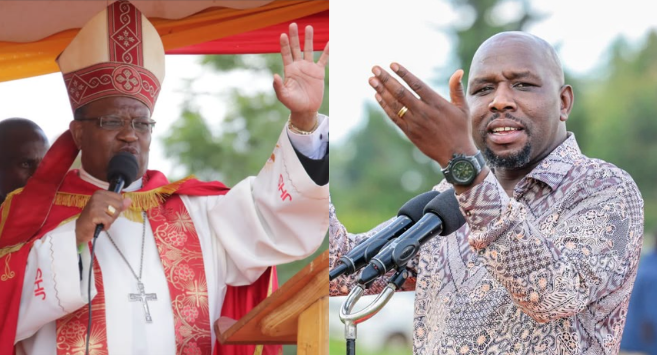
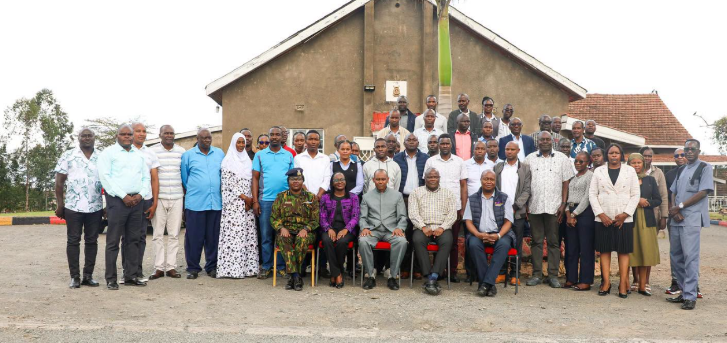
Dr Oluga issued the directive on November 21, 2026, during an engagement with Social Health Authority (SHA) compliance officers and hospital officials in Vihiga County. He argued that patients should not raise money at public hospitals for services covered by SHA, saying such demands could push struggling households further into poverty. He cited women running food kiosks and market eateries with limited working capital.
“You can imagine when that woman comes to the hospital, you want to put for her a Paybill to pay Ksh 50,000. You are closing the business,” he said.
He instructed compliance officers to “go through any public hospital. Any public hospital. Remove those things called Paybills. I will give you security.”
He extended the instruction across Vihiga County, saying commissioners would accompany officers. He urged hospitals to direct patients to the national insurance system.
“So the hospital then is now contributing to poverty in the society,” he said, saying hospitals should consider wider community wellbeing.
In a November 23 statement, the Council of Governors (CoG) Chairperson Muthomi Njuki said counties manage their health facilities under the Constitution and the Public Finance Management Act, 2012. He argued the PS had no supervisory authority over county entities.
“The Principal Secretary, Ministry of Health has no supervisory and or authority over County Government entities,” Njuki said.
The Governors said they support the principle that patients should not pay twice for treatment already covered and fully reimbursed by SHA. Their objection is that registration with the authority does not mean every Kenyan is covered for every service.
SHA operates through defined benefit packages, tariffs and eligibility conditions. According to the CoG, some treatments are excluded, some require co-payments and patients may exhaust their available benefits. Specialized interventions may also require alternative financing.
They warned SHA registration does not guarantee eligibility for every intervention, particularly specialized and tertiary care, and counties cannot absorb costs for services the scheme excludes or fails to reimburse without adequate funding.
“County governments cannot be expected to provide services that are either not fully covered under SHA, wholly excluded in the current benefits package, have a co-pay provision, are sub-optimally reimbursed or rejected and concurrently be denied lawful mechanisms for cost recovery,” Njuki added.
The Council cited delayed or rejected SHA claims and administrative bottlenecks, warning that hospitals need funds for staff, medicines and equipment. It questioned whether new e-contracting conditions could leave facilities outside the scheme.
Njuki urged the National Government to resolve the dispute through consultation.
“Matters affecting county health facilities must be addressed through consultation and established intergovernmental structures, not unilateral public pronouncements and directives,” he said.
The disagreement exposes a difficult balance at the center of Universal Health Coverage- protecting patients from unaffordable bills while ensuring hospitals have reliable funding. Removing payment channels may prevent inappropriate charges for covered services, but counties argue that a blanket approach could leave gaps where SHA does not pay.
For now, the Council has told county health facility managers to disregard Dr Oluga’s directive.