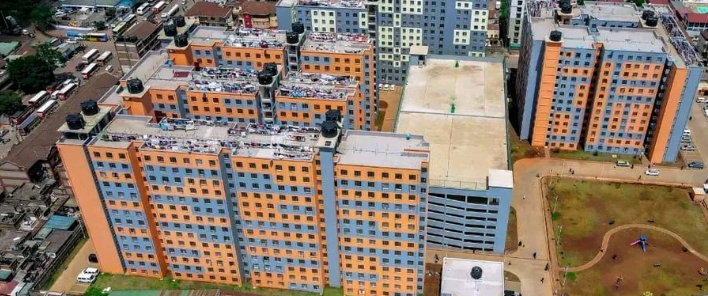
The promise of affordable housing in Kenya is straightforward. Give ordinary citizens an opportunity to own decent homes without having to spend a lifetime saving for a deposit or servicing an expensive mortgage.
But as more projects are completed and residents settle into their new homes, questions are emerging about who is actually benefiting, the quality of life inside these estates and whether the houses offer genuine value for money.
One of the biggest questions is whether the programme favors salaried workers over Kenyans who earn their living in the informal sector. The government’s housing model is structured around income categories rather than employment status. Social housing targets people earning up to KSh19,999 monthly, while the affordable housing category covers those earning between KSh20,000 and KSh149,999. Higher-income earners are catered for under the affordable market category.
This means a trader, casual worker, farmer or small business owner can qualify just like someone employed in an office, provided they meet the relevant financial and allocation requirements. However, qualifying on paper does not necessarily mean accessing a house is equally easy. Salaried workers have predictable pay slips, while informal earners may struggle to demonstrate consistent income when applying for financing.
The government has acknowledged this challenge and is exploring the use of alternative financial records, including mobile money transactions, SACCO savings and business records to assess the ability of non-salaried Kenyans to repay housing loans.
The numbers also reveal a gap between registering interest and being financially ready to own a home. National Housing Corporation disclosures reported in 2026 showed that approximately 80 per cent of registered applicants had not made any contributions towards their housing deposits as at May 2025. This does not establish that salaried workers benefit more, but it raises questions about whether the people the programme targets can comfortably afford to proceed beyond registration.
There are also concerns about the living conditions in some completed estates. At Park Road Estate in Ngara, residents have complained about prolonged water shortages, malfunctioning lifts, inadequate security and the management of shared facilities. The estate collects approximately KSh3,000 per household in monthly service charges, translating to about KSh4.1 million across its 1,370 units. Residents have questioned why essential services remain unreliable despite these collections.
Such complaints raise an uncomfortable question. Are affordable housing estates becoming organized versions of the informal settlements they were intended to replace? Planned apartment developments have formal structures, designated amenities and shared infrastructure. However, poor maintenance, overcrowding, unreliable utilities and weak management undermines those advantages. A modern building does not automatically guarantee a decent living environment.
Is there value for money in owning one of these apartments?
Some of the programme’s published social housing prices include approximately KSh640,000 for a studio, KSh960,000 for a one-bedroom unit and KSh1.28 million for a two-bedroom unit. These prices are considerably more accessible than many conventional property offerings. At Park Road, earlier flagship units were priced from approximately KSh1.5 million for a one-bedroom apartment, with larger units costing more.
However, buyers must consider more than the advertised purchase price. The required deposit, monthly instalments, financing period, service charges, utilities and future maintenance all contribute to the actual cost of ownership. A relatively inexpensive apartment can become financially burdensome if residents must repeatedly pay for services that should already be provided through estate management.
True, affordable housing should not be judged by the number of buildings constructed or keys handed over. It should, however, be measured by whether ordinary Kenyans can realistically afford the homes, whether informal earners have a fair opportunity to qualify and whether residents enjoy reliable water, security, sanitation and properly maintained facilities.
Owning a house is a significant achievement, but the real promise of affordable housing is not simply giving Kenyans somewhere to sleep. It is giving them a decent place to live.