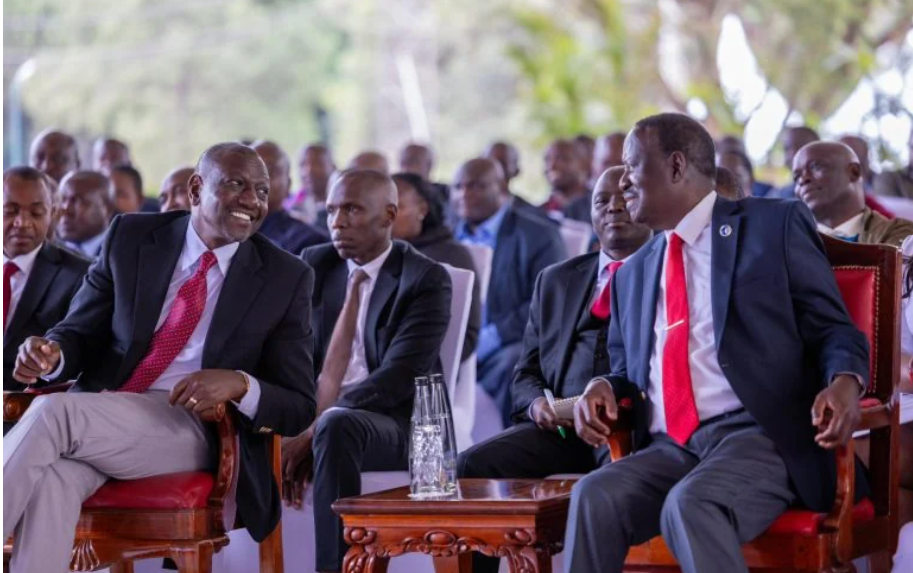
In its continued tracking of public opinion towards the Broad-Based Government that was formed by President William Ruto and the late Raila Odinga, the TIFA Research found that the highest levels of opposition for the Broad-Based Government were recorded in Nairobi County, Lower Eastern and Mount Kenya regions.
TIFA also recorded depressed support in Coast region, South Rift and Lower Eastern regions.
“It is now over a year since TIFA began to track the popularity of the so-called ‘Broad-Based Government’ (BBG) arrangement between President William Ruto and the former (and the late) Prime Minister Raila Odinga that was launched in the wake of the Gen-Z protests of June 2024. As the relevant survey results have shown, the level of disquiet among their
respective core support-bases, especially within ODM, led to the split within this longstanding Opposition party, giving rise to Nairobi Senator Edwin Sifuna’s presidential bid under the banner of a new party, the Linda Mwananchi Movement,” began TIFA in their report.
It went on, “At the same time, the leaders of what remains of ODM continue to negotiate (at least in public rhetoric) with President Ruto’s UDA over the terms of their 2027 election coalition arrangement. (Whether the recent silence about the Ten-Point Agenda’ of reforms that was launched by Ruto and the late Raila Odinga means that this aspect of conditionality shaping
their future relationship has been abandoned is unclear.) What position ODM will take if neither of its core election-related demands are met (these being the deputy-president slot and the ‘zoning’ of its strongholds so that UDA and other Kenya Kwanza parties refrain from fielding any down-ballot candidates there) remains to be seen.”
In their data findings, TIFA reported that 43% of Kenyans surveyed opposed the Broad-Based Government, 32% supported it, 15% had no opinion of it while 10% of them were unaware of this Government.
Among the respondents who opposed the BBG, TIFA found that the respondents were 57% from Nairobi, 57% from Lower Eastern, 54% from Mount Kenya, 51% from Western Kenya, 47% from South Rift, 44% from Nyanza, 32% from Coast and 19% from Central Rift.
Today, President William Ruto’s broad-based government arrangement with the Orange Democratic Movement (ODM) is increasingly taking shape as the two political formations explore a possible joint strategy for the August 2027 General Election. Their engagement has included discussions on a shared manifesto covering key national priorities such as healthcare, housing, agriculture and economic development.
Ruto has been urging leaders from both sides to work together and support his bid for a second term, while ODM, under Oburu Oginga’s leadership, has defended the partnership as an opportunity to influence government policy and participate in national decision-making. The growing cooperation has also been reflected in joint political engagements and consultations involving leaders from the two camps.
However, the proposed alliance still faces unresolved questions about power-sharing, leadership positions and the political benefits each party expects to gain. ODM wants a formal agreement that clearly defines its role in a possible post-election government, with some of its leaders pushing for the party to have a say in selecting Ruto’s running mate. UDA, on the other hand, must consider the position of Deputy President Kithure Kindiki and its own internal interests.
There are also concerns about progress on the 10-point agenda previously agreed upon by Ruto and the late Raila Odinga. As the election approaches, the two parties continue to balance their cooperation with competing ambitions, party loyalty and regional interests. Whether the arrangement develops into a lasting electoral coalition or encounters further divisions will depend largely on how these negotiations unfold.