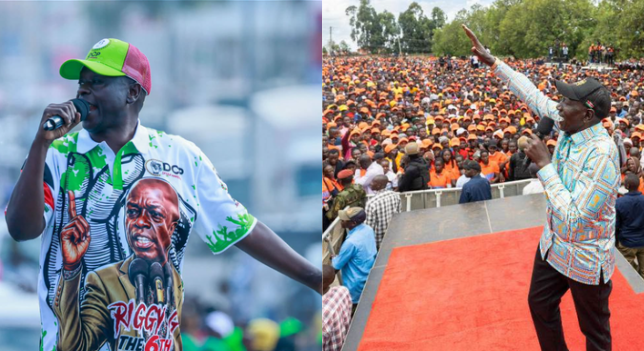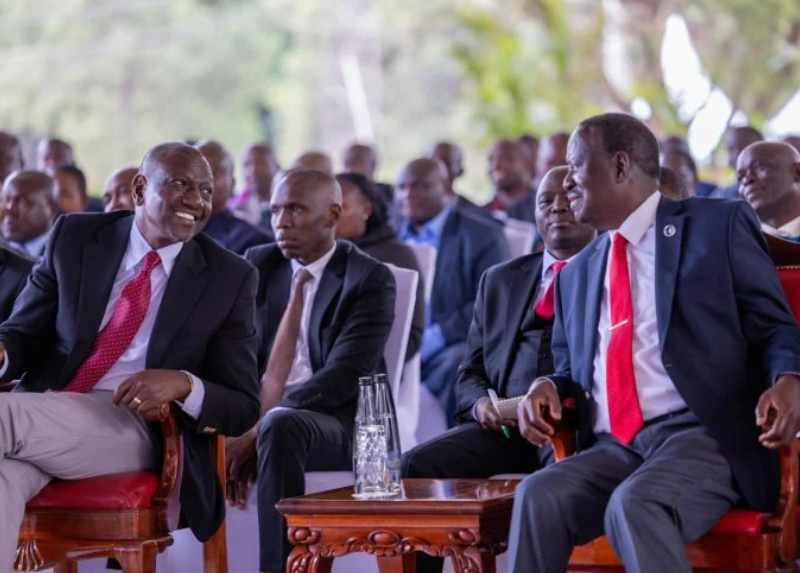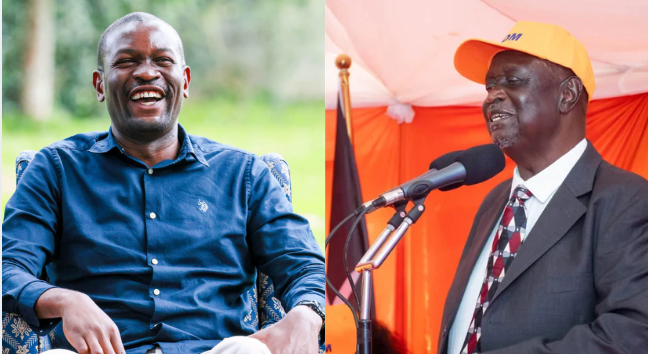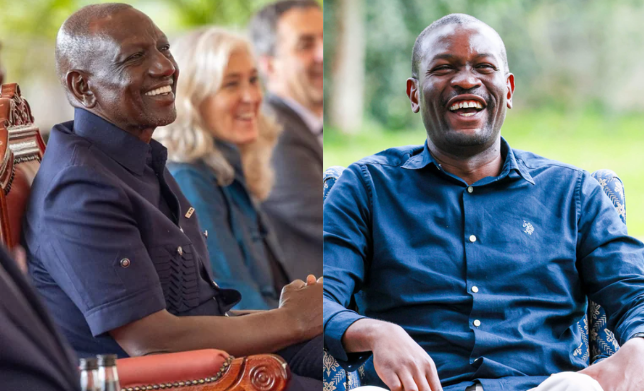
Incumbent President William Ruto, the party leader of the United Democratic Alliance, and Nairobi Senator Edwin Sifuna, the party leader of the Linda Mwananchi Movement, have emerged as joint front runners ahead of the 2027 presidential election, scheduled for August 10.
In a report by the Trends & Insights For Africa (TIFA), 31% respondents named the two politicians when asked whom they wanted to win the presidential election.
According to TIFA, their data indicated that Sifuna’s rise coincided with the declining support for other opposition presidential hopefuls while Ruto’s support increased compared to earlier TIFA reports.
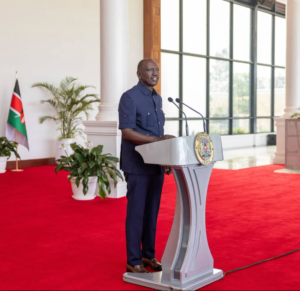
The United Democratic Alliance (UDA) grew out of William Ruto’s political ambitions after his relationship with then President Uhuru Kenyatta deteriorated during their second term in office. Having served as Kenyatta’s deputy, Ruto began building an independent political base, eventually bringing together UDA, Musalia Mudavadi’s Amani National Congress and Moses Wetang’ula’s FORD-Kenya under the Kenya Kwanza Alliance.
The coalition campaigned on a bottom-up economic agenda, promising to improve the livelihoods of ordinary Kenyans and create opportunities for those at the lower end of the economic ladder. Its victory in the August 2022 General Election transformed the alliance from an opposition coalition into the country’s governing political formation, with Ruto assuming the presidency.
Linda Mwananchi, on the other hand, represents a different kind of political evolution. Its emergence followed growing disagreements within opposition allied Orange Democratic Movement over the party’s political direction and its engagement with Ruto’s administration. The movement drew support from politicians and activists who questioned the wisdom of cooperating with the government, particularly amid public dissatisfaction over economic conditions, governance and accountability.
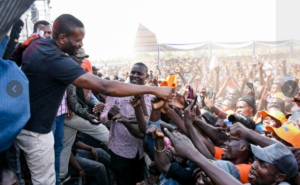
The Gen Z protests of 2024 further shaped its political messaging, giving greater prominence to demands for transparency, constitutionalism and generational representation. With Edwin Sifuna increasingly associated with the movement and its political ambitions, Linda Mwananchi has sought to develop an alternative political platform ahead of the 2027 elections.
President Ruto has been a career politician since the late 1990s, occupying offices Parliament and Ministries before becoming Deputy President and President. On the other hand, Sifuna- a lawyer by profession, began his political career as the Secretary General of ODM before wining the Nairobi Senatorial seat in 2022. His public profile grew through his frequent commentary on government policies, political accountability and constitutional matters
With the 2027 General Election approaching, Kenya’s political landscape is taking shape around competing ideas of leadership, economic management and political accountability. Ruto is seeking to consolidate his position as an incumbent president, while Sifuna is attempting to transform his growing political following into a credible national movement.
Their emerging rivalry reflects a wider debate between those defending the government’s record and those demanding a different political direction. Ruto has the advantage of an established national political network and the machinery of government, while Sifuna’s challenge will be to translate public enthusiasm into organized support across the country’s regions.
Nevertheless, the presidential field remains open, with other political figures and coalitions expected to influence negotiations and alliances. The coming months will reveal whether Linda Mwananchi can develop into a formidable national political force or whether established political formations will retain their influence over the 2027 contest.
In the treads of Ruto and Sifuna, other presidential preferences recorded by TIFA included Kalonzo Musyoka at 9%, Fred Matiangi at 5%, Rigathi Gachagua at 4% and Ndindi Nyoro at 1%.
Other unnamed candidates, undecided preference, no presidential preference and no response were obtained from 20% of the survey respondents.