In Kenya, the journey from television screens, music studios and comedy stages to Parliament and other political offices is becoming increasingly familiar.
Musicians Charles Njagua alias Jaguar, Ekko Dydda and Davidson Ngibuini alias DNG, comedians John Kiarie, Felix Jalango, media personalities Mohammed Ali Jicho Pevu, Gathoni Wa Muchomba, Sabina Chege and infamous blogger Robert Alai are a handful of local ‘celebs’ who entered Parliament within the last two General Election cycles in Kenya.
A recognisable face, a large social media following and the ability to command public attention can- and did- provide a head start in electoral politics.
But as the country approaches another general election, an important question deserves attention: are Kenyans electing people because they understand governance, or because they already know their names?
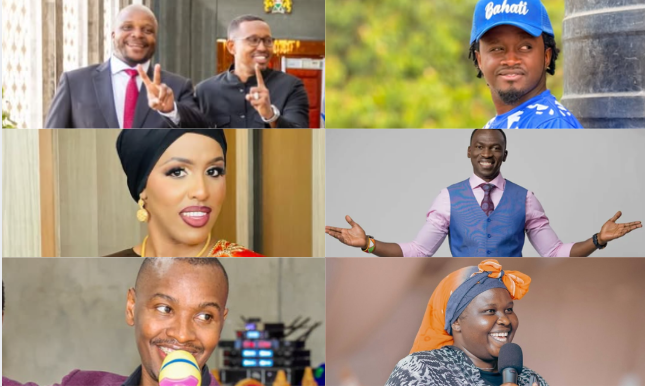
On August 10, 2027, another batch of local ‘celebs’ including comedians Nasra Yusuf and Jemutai; musicians, comedians and bloggers including KRG The Don, Sammy Kioko, Samidoh, Kevin Bahati, Eric Omondi, Stevo Simple Boy, Octopizzo, Jaymo Ule Msee, Cassypool and Jalango announced plans and intentions to be on the ballot papers for a range of elective posts including Members of Parliament, Senators, Governors and Women Representatives.
Several media personalities and bloggers including Trevor Ombija, Stephen Letoo, Tina Ogal, John Wanyama, Willis Raburu, Salim Swaleh, Mwanahamisi Hamadi, Alex Mwakideu, Micheal Njenga and Lulu Hassan also intend to vie in elective posts in 2027.
There is nothing inherently wrong with celebrities entering politics. Public figures have the same constitutional and democratic right as other citizens to seek elective office. Some have also demonstrated a genuine interest in public service.
However, popularity and political competence are not interchangeable. Winning an election requires the ability to persuade voters; governing requires an entirely different set of skills, including policy analysis, legislation, budgeting, public administration and an understanding of the political and economic forces shaping society.
The concern, therefore, is whether every aspirant, regardless of their previous profession, has adequately prepared for the responsibilities attached to public office. A celebrity may understand public relations, branding and audience engagement exceptionally well, but these abilities alone do not automatically translate into an understanding of parliamentary procedure, public finance, constitutional law or economic policy.
This is where political science, public policy, economics, law and public administration become relevant. Political science, in particular, introduces learners to governance structures, political institutions, public participation, international relations, power dynamics and the formulation of public policy. Such knowledge can help prospective leaders appreciate that political office is not simply an extension of personal influence, but a responsibility to represent diverse interests and make decisions with far-reaching consequences.
While Kenya’s current legal framework does not impose a blanket university-degree requirement on elective posts, what Kenya needs is a political culture that values demonstrated knowledge, policy understanding, integrity, relevant experience and a willingness to learn.
Not politicians from outside career political circles who make it to Parliament and begin making TikTok videos from Chambers and official government offices; or bragging about newly acquired wealth often subjectively linked to these elective posts as has been seen in Kenya in the past few years.
The ballot should remain open to all qualified citizens. But voters should look beyond fame, campaign theatrics and online popularity to examine what aspirants understand about the offices they seek and what they intend to do with the power entrusted to them. After all, governing a country is not a performance and its citizens are not an audience.