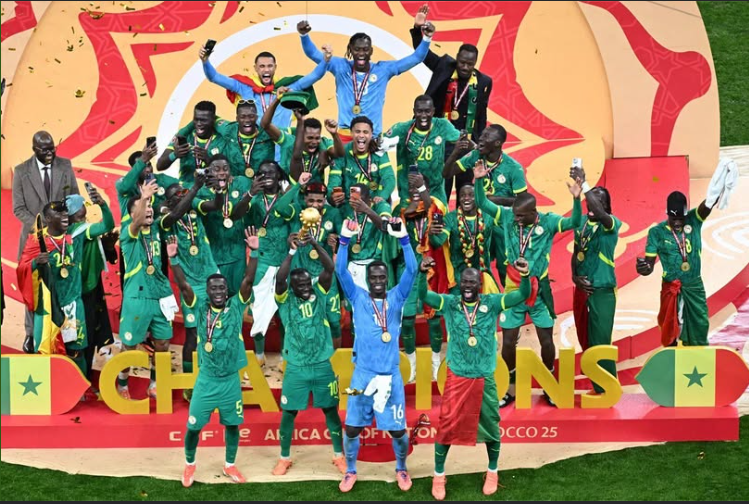
In a decisive ruling delivered on Tuesday, November 24, the Lausanne-based sports tribunal overturned the Confederation of African Football (CAF) Appeal Board’s March decision that had stripped Senegal of the title and declared Morocco 3-0 winners by forfeiture.
Court of Arbitration for Sport (CAS) Secretary General Matthieu Reeb confirmed the outcome, saying: “The CAS panel finds that the referee did not commit any error of law.”
The ruling centers on the actions of Congolese referee Jean-Jacques Ndala during the January 18 final at the Prince Moulay Abdellah Stadium in Rabat. Senegalese players had temporarily walked off the pitch in protest after Morocco were awarded a late penalty while the match was still goalless.
The players returned after approximately 14 minutes, allowing the match to continue. Morocco’s Brahim Diaz failed to convert the penalty, sending the contest into extra time, where Pape Gueye scored the decisive goal to give Senegal a 1-0 victory.
Morocco subsequently challenged the result, arguing that Senegal’s temporary withdrawal violated the Africa Cup of Nations (AFCON) regulations. The CAF Appeal Board eventually agreed, invoking Articles 82 and 84 of the tournament rules to declare Senegal forfeited the match and award Morocco a 3-0 victory.
However, Senegal maintained that the referee had allowed the game to resume and that the completed result should stand. The Football Federation of Senegal (FSF) took the matter to CAS, seeking to overturn CAF’s decision and have its victory restored.
In its assessment, the arbitration panel sided with Senegal on the question of the referee’s authority to restart the match. It reasoned that both teams had returned to the pitch and expressed willingness to continue playing.
A statement from the panel, quoted in its ruling, explained: “By blowing his whistle to restart play, the Referee considered that the conditions for resuming the match had been met – both teams were on the pitch again, and both expressed their willingness to resume.”
The panel further held that Articles 82 and 84 were intended to determine the outcome where a team’s conduct caused a referee to permanently abandon a match. Since the final had resumed and been completed, those provisions did not apply in the circumstances.
It concluded that the referee’s decision was not arbitrary and that he had not committed an error of law by allowing the game to continue.
Nairobi Post takes a look at how the dispute unfolded below:
The dispute has taken several twists since the final, with the title changing hands through successive football and legal decisions.
- January 18, 2026: Senegal beat hosts Morocco 1-0 after extra time in the AFCON final in Rabat. Pape Gueye scored the winning goal after Brahim Diaz missed a late penalty.
- March 17, 2026: CAF’s Appeal Board overturned the original result, declared Senegal to have forfeited the match and recorded a 3-0 victory for Morocco.
- March 25, 2026: CAS confirmed receipt of Senegal’s appeal against CAF and Morocco’s football federation. Senegal sought to have the CAF decision set aside and its championship reinstated.
- October 8, 2026: CAS heard arguments from the parties during proceedings in Lausanne, Switzerland.
- November 23, 2026: CAS announced that the parties would receive the decision the following afternoon.
- November 24, 2026: CAS upheld Senegal’s appeal, restoring the original result and confirming the West African nation as AFCON 2025 champions.
The ruling brings a dramatic chapter in African football to a close, although the consequences are likely to continue generating debate over the interpretation of tournament regulations and the authority of match officials.
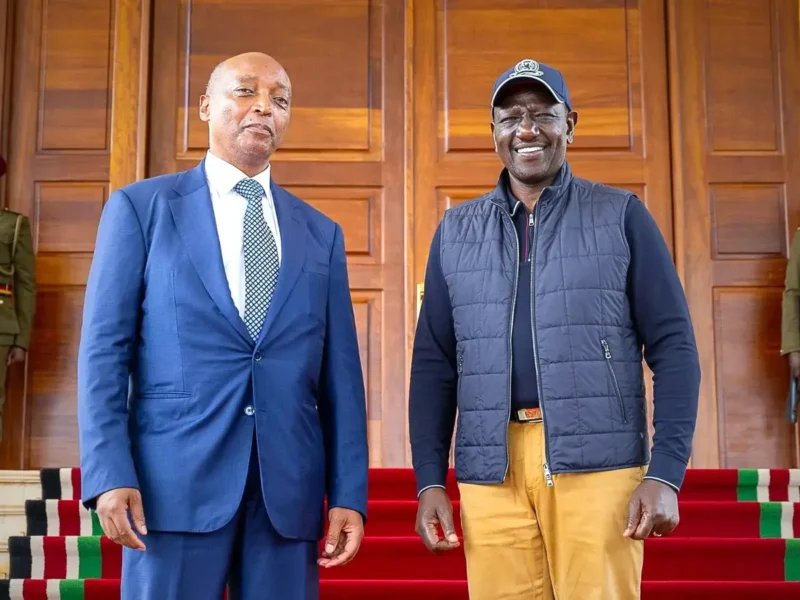
CAF President Patrice Motsepe had previously pledged that the organization would respect the arbitration outcome, saying: “Whatever the CAS decision, we will respect and abide by it.”
For Senegal, the decision restores a title they had initially celebrated on the pitch before losing it through CAF’s administrative ruling. For Morocco, it reverses the 3-0 victory awarded by the continental governing body.