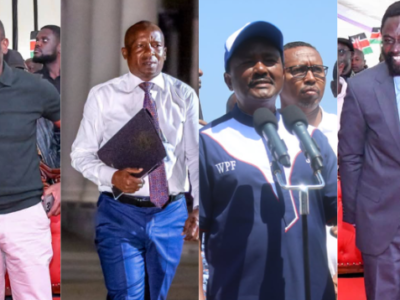
Busia Senator Okiya Omtatah has challenged Kenyans to question whether taxpayers should repay loans borrowed in their name but allegedly diverted for private benefit.
“Fellow Kenyans, stop calling it public debt when the public never benefited from it!” he said. Omtatah described such borrowing as “odious debt”, arguing that money obtained without accountability may have benefited politically connected individuals rather than citizens.
His remarks come as Kenya’s public debt rises, placing pressure on government finances and renewing debate about how borrowed funds are spent. His argument is not that all public debt should go unpaid, but that loans allegedly misappropriated or diverted should face scrutiny.
National Treasury figures show public and publicly guaranteed debt stood at KSh13.12 trillion in June 2026, up from KSh11.81 trillion a year earlier. It represented 70.4 per cent of GDP. By September 2026, the debt stock had reached KSh13.53 trillion, with domestic borrowing accounting for 57.5 per cent.
The cost of servicing that debt is substantial. In 2025/26, the government spent KSh1.77 trillion on debt service, up from KSh1.59 trillion the previous year. These payments compete with other demands on the national budget, including healthcare, education and infrastructure.
The public wants clear evidence that borrowing delivers value.
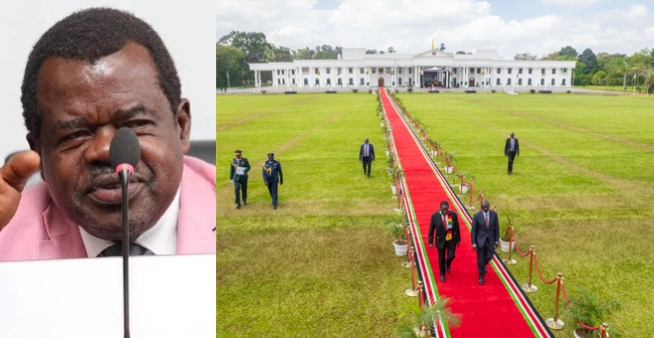
Omtatah’s remarks also invited scrutiny of government expenditure, including spending at State House under President William Ruto. The Controller of Budget reported that State House spent KSh18.55 billion in the year ended June 2026, against an original allocation of KSh8.5 billion. Some KSh6.73 billion was classified as “other expenses”, prompting questions about transparency and how the funds were used.
Renovations have attracted attention too. A Citizen Digital investigation reported that KSh775 million had been spent refurbishing Nairobi State House by September 2024, against an estimated project cost of KSh1.7 billion. A wider 12-year programme covering State Houses and lodges was estimated at KSh10.7 billion. The 2026 budget allocated KSh530.4 million for State House Nairobi maintenance, alongside funds for state lodges.
The Controller of Budget also reported national government travel expenditure of KSh30.69 billion in 2025/26: KSh21.98 billion on domestic travel and KSh8.71 billion on foreign trips. State House accounted for KSh2.5 billion in travel expenditure.
Government hospitality spending rose to KSh11.72 billion, from KSh6.33 billion in the previous financial year. While travel, maintenance and hospitality are part of government operations, the scale of expenditure raises questions about restraint and value for money when the country is borrowing heavily.
Omtatah’s challenge also has a legal dimension. In June 2026, the High Court declined the Attorney-General’s application to strike out a petition challenging the legality and constitutionality of about KSh6.95 trillion in debt allegedly accumulated between 2014/15 and 2023/24. The case was allowed to proceed to a full hearing. The court did not rule that the debt was illegal or cancel repayment obligations.
The petition sought scrutiny of how the borrowing was authorized and whether the money was properly accounted for and used.