Tanzania is moving to reclaim responsibility for managing a section of its upper airspace that has been coordinated by Kenya for nearly forty years, but the process will require more than a political declaration or a decision by its aviation authorities.
Tanzania approached the International Civil Aviation Organization (ICAO), the United Nations agency responsible for international civil aviation standards, to facilitate the transfer of air traffic services in the affected section of the Dar es Salaam Flight Information Region (FIR).
The development follows discussions between a Tanzanian delegation and ICAO Secretary General Juan Carlos Salazar during the Seventh Worldwide Air Transport Conference in Montreal, Canada, between November 16 and 20, 2026.
In a statement issued on November 19, the Tanzania Civil Aviation Authority (TCAA) confirmed that the discussions focused on the country’s proposal to resume responsibility for providing air traffic services in the relevant upper airspace.
TCAA stated: “ICAO outlined the next step for Tanzania and Kenya to formalize a bilateral agreement before the process of amending the Air Navigation Plan begins.”
This means Tanzania cannot simply announce that it has taken over the affected airspace. Kenya must be involved in negotiations, while ICAO must oversee the necessary changes to ensure that international aviation operations continue safely.
What does taking back airspace actually mean?
One important distinction is that Tanzania is not reclaiming territory that belongs to Kenya. The arrangement concerns the provision of air traffic services, including monitoring aircraft movements, coordinating flight paths and maintaining communication with pilots.
Under international aviation rules, a country can delegate responsibility for providing these services to another state without surrendering its sovereignty over the airspace.
ICAO’s Annex 11 to the Convention on International Civil Aviation allows countries to delegate air traffic services through mutual agreement. It also makes clear that such delegation does not remove the delegating country’s national sovereignty.
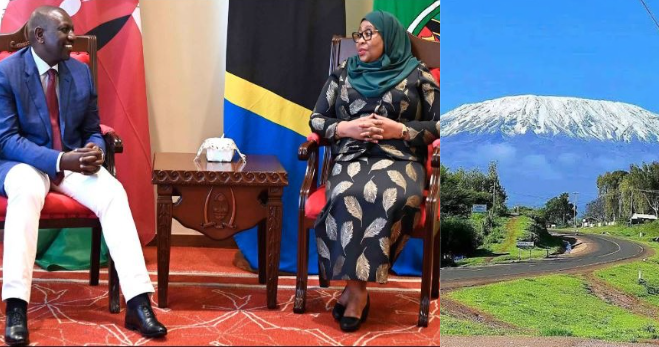
In this case, Tanzania wants to resume operational responsibility for a section of the upper airspace within its Dar es Salaam FIR, particularly the eastern triangle around the Kilimanjaro corridors and routes towards Nairobi.
The arrangement dates back approximately 40 years and was established partly to address limitations in Tanzania’s aviation surveillance and communication infrastructure.
How will Tanzania go about reclaiming its airspace?
The first step is reaching a bilateral agreement with Kenya. The two governments must agree on the portion of airspace involved, the transfer arrangements, operational responsibilities and the date when the new system will take effect.
The second stage involves technical and safety preparations. Tanzania must demonstrate that it has sufficient radar coverage, reliable communication systems, qualified air traffic controllers and appropriate emergency coordination arrangements to manage aircraft movements safely.
The third stage involves developing an implementation plan. This includes training and licensing personnel, conducting safety assessments, establishing procedures with neighbouring air traffic control centres and testing communication and surveillance systems.
Finally, the countries must work with ICAO to amend the Regional Air Navigation Plan. The changes must be formally recognised and coordinated with neighbouring flight information regions before the new arrangement becomes operational.
The Rwanda-Tanzania case offers a practical example of this.
Tanzania itself previously participated in a similar airspace handover, when Rwanda sought to resume responsibility for managing its upper airspace after nearly fifty years of delegation to Dar es Salaam.
Rwanda began pursuing the change in July 2017, citing the need to improve aviation safety, meet regulatory requirements and support its ambition of developing Kigali into an aviation hub.
Following coordination meetings involving Tanzania, Rwanda and other neighbouring countries under ICAO, the two governments signed a handover deed in Kigali on August 16, 2022.
The transfer was not immediate. It required an implementation plan covering staff training, safety documentation, operational procedures and coordination with neighbouring aviation authorities.
According to an ICAO working paper, Rwanda officially assumed responsibility for providing air traffic services in its upper airspace above flight level 245 (24,500 feet above sea level) on December 1, 2022.
The question now remains. Why does Tanzania want the airspace back after nearly 40 years?
The issue has financial, operational and strategic implications. In 2017, Tanzanian authorities estimated that the country was losing approximately TSh1 billion (Ksh 48,632,025.70) annually in fees associated with aircraft using the affected airspace.
At the time, the government had also signed a TSh61.3 billion (approx. Ksh 2.98 billion) contract with French technology company Thales to install surveillance radar systems at four airports, including Dar es Salaam, Kilimanjaro, Mwanza and Songwe, signifying their economic interest in managing the airspace directyl.
Tanzania has since continued investing in its aviation infrastructure and strengthening its capacity to provide air navigation services.
The latest discussions with ICAO also covered preparations for a safety oversight audit scheduled for April 2027, alongside training and technical assistance.